Google Reviews
Is it worth paying someone to look after your Google reviews?
It depends how many people you take out a week. Here's what I saw doing it.

What I saw as a guide
I drove day tours out of Banff, a bus full of people and the Rockies out the window.
At the end of every tour I said the same thing. "Thanks for spending the day with us. It'd mean a lot if you could leave me a review. It helps me out a ton."
Then I'd tell them a message was coming with the link. And I was the one who had to send it.
Most days I didn't.
I'd worked a whole day. I wanted to go and do something after work. By the time I remembered, it was the next day, or the day after. By then they'd moved on.
The company tried to fix it with a reward. A bit of money for each five-star review a guide got. It didn't fix it. Guides still forgot. And paying per five-star review sits close to the line on Google's rules, because it pushes guides to ask only the happy ones. More on that below.
What I learned: if nobody asks on the day, you don't get that day's reviews. They don't turn up later.
Why the day after is too late
The best time to ask is right after the tour. That's when people are happiest. Ask the next day and you get a fraction.
It's not just me. BrightLocal asked a thousand people[2] in 2026 what they look for in reviews: 97% of them read reviews before picking a local business, 74% wanted reviews from the last three months and 32% wanted some from the last two weeks.[2]
So a profile with twenty-odd reviews and nothing new since winter isn't a strong profile. It looks like you're not running. The whole point of reviews is that people can see you're busy and good at it.
What doing it yourself takes
It's not hard. It's just every day.
- Ask every guest, in person, before they get off.
- Send the link that evening, while they're still smiling about it.
- Send one polite follow-up three days later. Most people say yes and forget. "If you haven't had a chance, it'd mean a lot."
- Reply to every review that comes in. Properly, not just "thanks".
- Do it again tomorrow.
We didn't even do step 3 as guides. Nobody told us to.
Step 5 is the hard one. Can you do it every single day, in season, when you're tired?
What it looks like when it slips
I look at a lot of tour operator listings. Most weeks I write to a few of them about what I see.
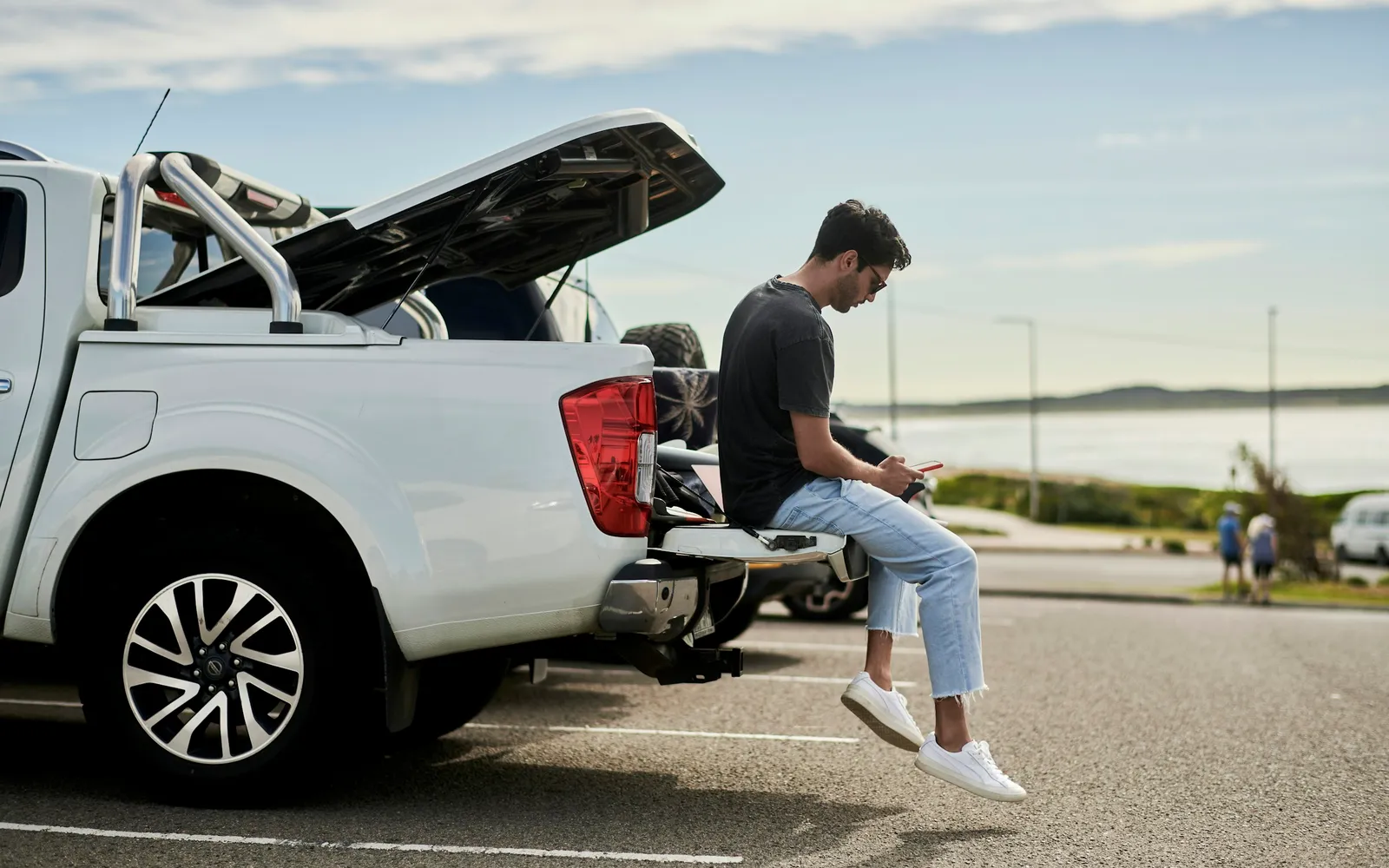
Here's one from this week. A charter boat with a couple of dozen reviews, every one of them five stars. The fishing is clearly good. But nothing new in months. The operator above them on the map had more than three times as many.
Same water, same fish. The difference is one of them asks.
The quiet one probably isn't worse. The listing just doesn't show how many people they take out. And with a handful of reviews, people wonder.
When a review does come in, the reply matters too. A quick "thanks" shows a bit of a lack of care towards someone who took time out of their day to write it. A bad review with a decent reply under it does you more good than a page with no bad reviews.
What a service actually does
If someone's doing it for you, this is what they do.
Every day:
- The message goes to every guest the same day, from your business name. Not just the ones who booked through a marketplace. Your direct bookings too.
- The follow-up goes three days later, without anyone having to remember.
Every week:
- Every review gets a reply that sounds like you.
- Any poor review gets flagged to you, so you answer that one yourself.
Every month:
- A short note: how many reviews came in, how many got a reply, what changed.
That's it. Someone asks every guest every day and every review gets an answer.
The rules you can't break
Whoever does it, you or a service, these are Google's own rules.[1] Break them and Google takes the reviews down. It can go further than that.
- No rewards for reviews. Google's policy says you may not offer the guest anything in return for a review: no payment, no discount, nothing free.
- No picking who you ask. You may not "discourage or prohibit negative reviews, or selectively solicit positive reviews". Ask everyone, the same way.
- No quotas for staff. Google lists "requesting that staff solicit a certain number of reviews" as prohibited.
- Asking is fine. Google allows you to "solicit or encourage" genuine reviews, as long as you don't push for a rating or tell people what to write.
- Paying your guides to ask is fine too. Paying them per five-star review isn't a good idea. It pushes them to ask only the happy guests, which is the picking Google bans. Pay for the asking, not the stars.
Do it yourself if
- You've got a few guests a week and asking is easy to keep up.
- Your tours are small and personal, multi-day, a handful of people. A personal message from you will do better than any system.
- You already pay someone in the office and they've got nothing else to do. Give it to them.
Pay someone if
- You've got more than twenty or thirty guests a week. Past that, I don't think you should be doing this yourself. You've got better things to do.
- Lots of people go through a very similar tour. One good message, sent to everyone every day, gets you more than you'd ever get by hand.
- You want your time on the tour and the business, not on sending links after work.
That's about it. If you'd rather do it yourself, do it. If you'd rather be out on the tour, hand it over.
Want to see yours?
Ask for a free Review Rundown and I'll tell you how your listing looks next to the operator above you on the map. Five plain sentences, one fix. No call.
And if you've decided the answer is "pay someone", that's what our Google reviews service is for.
Reuben Baty was a tour guide in Banff and now helps small tour operators get found and booked direct. About Cavero Tourism
Sources
- Google, Maps user contributed content policy, prohibited and restricted content. Period: 2026. Read .
- BrightLocal, Local Consumer Review Survey 2026. Period: 2026, published 11 February 2026, 1,002 US adults. Read .
Published .